
The French intelligence community believes that last week’s attacks in Paris which left 17 people dead could be a prelude to even more lethal attacks, a former counter-terrorism official told TIME magazine’s website on Monday.
Yves Trotignon, a former top counter-terrorism official in DGSE, France’s equivalent to the CIA, said, “There is a strong feeling that this is not over.”
Trotignon, now a private terrorism consultant, told the magazine he was in close contact with French intelligence officials investigating last week’s attacks. He added that most believe that although the instigators of last week’s attacks might all now be dead, “there is a strong feeling that maybe something more dangerous is ahead.”
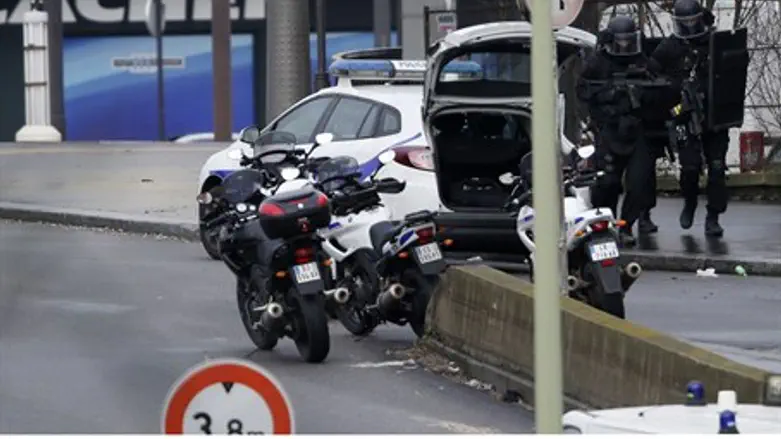
French police said on Monday that up to six members of the terror cell believed to be responsible for last Wednesday’s attacks may still be at large. One was reportedly spotted driving a car registered to the widow of one of the attackers, who is believed to be in Syria.
On Saturday, CNN reported that French law enforcement officers had been told to delete their social media accounts and to carry their weapons at all times because terror sleeper cells have been activated in the country.
According to the report, Ahmedy Coulibaly, who attacked the Hyper Cacher supermarket in Paris and killed four people there, had made several phone calls about targeting police officers in France before he was killed.
Last Thursday, one day after Said and Cherif Kouachi stormed the Charlie Hebdo newspaper office and killed 12 people, the head of Britain’s MI5 security agency, Andrew Parker, told defense and intelligence experts in London that British intelligence officers believed that terror groups were crafting “complex and ambitious plots” against Western targets.
Speaking of last week’s attacks, Trotignon told TIME that leaving aside the enormous turmoil, it could be far worse.
“Of course it was a drama with a lot of dead people on the ground,” he said, then apologized for perhaps sounding callous. Still, he noted, “these are not the worst possible terrorists in Europe.”
Averting the next terror attack could be a daunting task, Trotignon said, adding, “It is impossible in all of Europe, not only in France but also Germany and everywhere, to monitor every guy coming from Syria or Iraq. We know in the intelligence community that it is impossible.”
On Monday, the government in Paris announced it was deploying 10,000 troops to protect hundreds of Jewish schools and synagogues across the country — the first time France has ever used military personnel to protect civilians.
Army Colonel Benoit Brulen, speaking to a reporter in Paris’s 11th district, close to the site of the Charlie Hebdo massacre, said, “It is an indication of the level of menace we face,” he said.