
As of Thursday, residents of southern Israel were back on alert, after Wednesday night's barrage of Kassem rockets and mortar shells on towns and cities adjacent to the Gaza border fence. Despite the acceptance of a ceasefire by Hamas earlier this week, 21 rockets and mortars were fired at Israel beginning later Wednesday afternoon and continuing into Thursday. Two Israelis were wounded in the night-long barrage, including a baby.
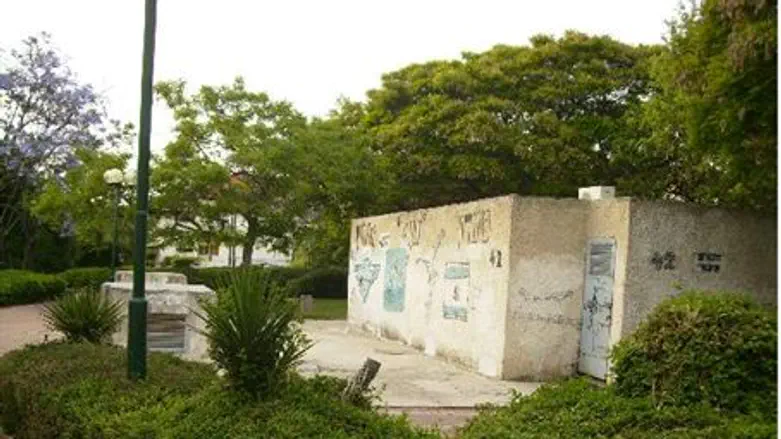
As a result, the Homefront Command (Pikud Ha'oref) reinstated security precautions that had been suspended after the ceasefire announcement. According to the regulations, gatherings of over 500 people must receive special permits from the Command, and bomb shelters should remain open on a constant basis. Any shelters that are not open should be brought to the attention of Homefront Command officials, who will ensure that they open. In addition, classes will not be held in buildings with non-reinforced concrete roofs.
The regulations have already impacted a number of mass events this week; on Tuesday, the city of Ashkelon held its Breeza festival, attended by thousands. After several rockets hit Israel early Wednesday, city officials and Homefront Command officials discussed the possibility of holding the festival that night. Permission was granted, but after rockets began falling again Wednesday afternoon, the festival was cancelled. A follow-up Breeza festival set for next week has already been canceled. Other mass events, such as soccer games, will go on – or not – depending on the security situation each day.
“This is the best way to handle it,” says Colonel Gili Shenar of the Homefront Command. “Our strategy is to come up with methods to allow Israelis to adjust to long-term security issues, such as the rockets from Gaza. The objective is to allow as much of routine life to continue normally, taking into account security issues.”
Speaking to Arutz 7, Shenar says that a great deal of thought goes into Homefront Security instructions. “Breeza is a good example,” Shenar says. “We know that many people would have loved to attend the festival Wednesday night, but after considering the intelligence information, we determined that it was just too dangerous.” It was an assessment that turned out to be right, he adds; imagine if a Kassam had struck a crowd of thousands at the festival?
And while 500 may sound like an arbitrary number, it isn't, Shenar says – again, based on the intelligence at hand. “That number is certainly not carved in stone, but we feel that crowds that are larger than that amount will have a harder time ensuring safety. The number could change anytime, based on events on the ground.” The current security precautions cover towns and cities within a 40 kilometer radius of Gaza - including large cities such as Ashdod, Ashkelon, Be'ersheva, Dimona, Ofakim, and others.
The most important rule, Shenar says, is common sense. “A wedding with a few hundred guests – even 500 – that is held indoors, or even outdoors, is fine, providing that there are sufficient safe areas that guests good take shelter in in the event of an attack. Access to shelter – whether at home, work, school, or even outside – is the key element here. Make sure you are never more than a few seconds from an area where you can take shelter from an incoming missile, for as long as the emergency situation continues.” When a siren is sounded, or an announcement is made on radio or TV – or at the sound of an explosion, says Shenar - “take immediate cover, and stay there for at least ten minutes.”
Shenar urges all Israelis to check out the Homefront Command's website, at www.oref.org.il, where instructions and information are available in Hebrew and English. In addition, Israelis are invited to call the Command, by dialing 1207 from any phone, with any questions they might have, he adds.
�