
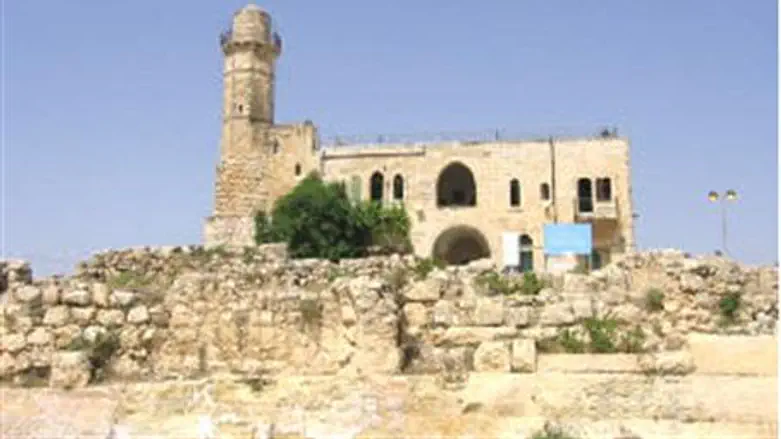
Special events are scheduled at the Tomb of Samuel (Nebi Samuel) on Jerusalem Day on Tuesday night and Wednesday, the traditional date of the death of the Prophet Samuel, who anointed Saul (Shaul) as king.
The holy site and a synagogue are located on a hill approximately 3,000 feet high, immediately west of Jerusalem and near the Ramot neighborhoods.
Events will begin at 8:30 p.m. Tuesday with a giant bonfire, under the protection of Border Police, and the site will be open all night and the following day. The site has undergone extensive renovations in the past year, including to the electrical system and lighting. Entrance is free of charge. Arrival will be via buses and mini-buses that will leave Ramot and the Ofer IDF base on Highway 443.
The site is rich in archaeological discoveries, including several from the First and Second Temple periods. Crusaders in the late 12th century said they found the bones of Samuel in a Jewish cemetery in Ramle and re-buried them at the present site, because of the mistaken belief that Samuel's birthplace in Ramle is the same as “Rama,” near Jerusalem.
During the Hellenistic period 2,200 tears ago, a large village was established there under royal patronage to protect the northern approaches to Jerusalem. The excavations uncovered the remains of several dwellings built on the hillside.
In 1187, Muslims pillaged the Crusaders' Fortress that had been built at the site, and it was later destroyed to its foundations for fear of falling once more into Crusader hands.
Nebi Samuel became a pilgrimage site for Jews, but Muslims built a mosque there in 1730.