
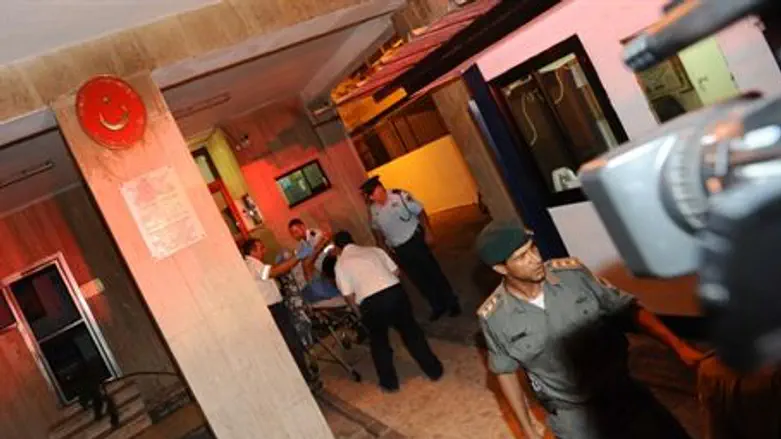
Nadim Injaz, the Palestinian Authority Arab from Ramallah who was shot after breaking into the Turkish Embassy in Tel Aviv and threatening staff there, has been sentenced two years in prison.
Last August Injaz rushed into the embassy building armed with a 20-inch knife, a fake gun, and flammable materials, and threatened to burn the embassy down around him if he was not granted political asylum. Injaz was shot and moderately wounded in the incident by Turkish security personnel, who initially prevented Israeli emergency personnel from tending to Injaz asserting the embassy was Turkish soil and therefore off limits to Israelis.
An hour after Injaz's shooting Israeli emergency personnel were allowed to evacuate him to Ichilov Hospital in Tel Aviv, after which he was taken into custody. On Thursday the Tel Aviv District Court accepted a plea bargain reached between prosecutors and Injaz's attorney under which he would serve two years for aggravated trespass, attacking a public official, making verbal threats and staying in Israel illegally.
"Whatever the defendant's motives may be," Judge Gili Ravad wrote in her decision. "One cannot make light of his actions and cannot accept them. Invading a foreign embassy, threatening to employ weapons and flammable materials and assaulting members of the Embassy are very severe actions, which may have not only caused panic and endangered the public, but might have affected the foreign relations of the State of Israel."
Injaz is well known to Israeli authorities who have had to use force to subdue him in previous encounters, including a previous invasion of the British Embassy in Tel Aviv, during which he threatened to commit suicide if he was not granted asylum. According to the sources, Injaz insisted that Turkey protect him from Palestinian Authority forces, who he claimed were seeking to arrest him because he said he at one time worked with Israeli law enforcement authorities. An Israeli hostage negotiation team was sent to the embassy as well.
Injaz has 15 prior convictions, has served several prison sentences, and is considered mentally unstable. He has demanded help leaving the country rather than being returned to the Palestinian Authority and filed for relief from the High Court of Justice last year.
"As much as you feel sympathy for a defendant's plight and regret their personal circumstances," Judge Ravad said referring to Injaz's "problematic mental state". "You cannot come to terms with his action. No doubt this incident is more serious than previous incidents. This is true both in terms of the level of daring and violence demonstrated by the defendant. As a function of his escalation in the serious of his offenses, [the defendant] was found guilty this time and severe punishment is required."