
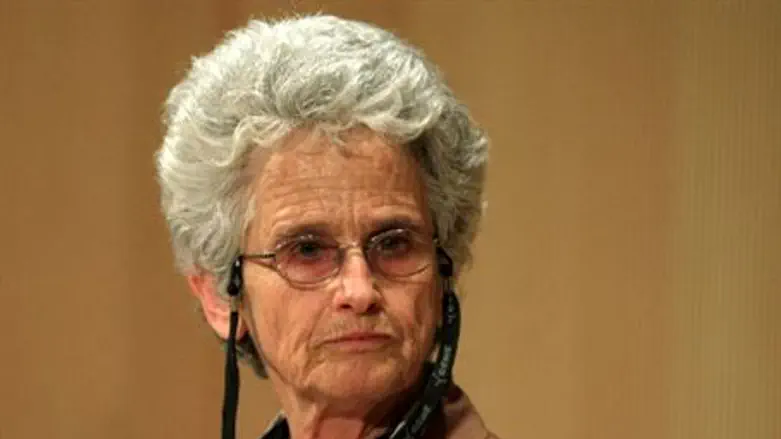
Freedom of speech applies to rabbis as well as other citizens, says Prof. Ruth Gavison,a legal expert and a leading intellectual. She said that rabbis often are “annoying” because they “make people look in the mirror.”
Speaking at a conference of the institutes of Israel Democracy and Van Leer Jerusalem, the law professor declared that efforts to prosecute rabbis for a letter they recently wrote about the issue of selling real estate to Arabs are a danger to the foundations of freedom of speech.
While not taking a stand on the issue of the controversy over whether Arabs should be allowed to buy homes, even if they are part of a move to erode a Jewish presence, Prof. Gavison addressed the aspects of rabbi’s civil rights. Considered a liberal Zionist, not a rightist and not identified with the national religious camp, Prof. Gavison has distanced herself from the radical left that favors a one-state solution, which would mean the end of Israel as a Jewish state.
“There are those who want to bring about a prohibition of freedom of expression for rabbis because rabbis annoy them,” she said. “Freedom of expression means allowing things to be said, even if most of them are annoying and place people in front of a mirror. People want to silence them.”
A founding member of the Association for Civil Rights in Israel, she said rabbis should not be made an exception for freedoms granted to others. Prof. Gavison added, "You could not have prevented the murder of [former Prime Minister Yitzchak] Rabin by arresting someone who said he [Rabin] is a traitor.” She added, "It is a terrible thing to say but, it is not illegal to state it."
Prof. Gavison’s intellectual, outspoken views of civil rights and Zionism may have cost her a seat on the High Court three years ago. She was nominated to be a justice, but then-Justice Minister Daniel Friedmann reportedly asserted that High Court justices, headed by President Aharon Barak, opposed her nomination because of their disagreement with her views, especially with her criticism of Barak's statement that "everything is justiciable." Prof. Gavison claimed that since judges in Israel are appointed by other judges and Israel has no constitution, the court should not give itself the broad powers it has taken.
An opposing view at the conference was expressed by Prof. Mordechai Kramintzer, who argued that the Justice Minister should have immediately opened a criminal investigation against Rabbi Shmuel Eliyahu, whose letter he said was grounds for charges of racism and incitement.
Prof. Gavison maintained that the letter did nothing to destroy democracy, which she said includes “listening to the needs and crises of others. In an action consistent with her expressed beliefs, several years ago Gavison and Rabbi Yaakov Meidan of the Har Etzion Hesder Yeshiva cooperated on drafting a proposed "covenant" between secular and religious Israelis on how to run a modern Jewish state.