
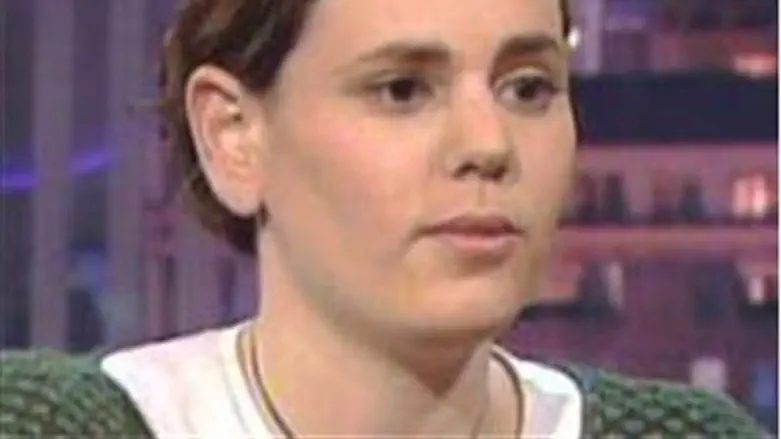
Fifteen years after the event, “everything connected with the murder of Yitzchak Rabin is still one of the most sensitive issues in Israeli society – and anything that interferes with the official account, that would require authorities to reconsider any aspect of the murder, is off limits” - including the possibility of exonerating Margalit Har-Shefi of charges that she failed to prevent Rabin's death, says Professor Eliav Shochetman, Professor Emeritus of Jewish Law at Hebrew University and Dean of the Sha'arei Mishpat College Law School.
Whether other open questions need to be reconsidered, says Professor Shochetman, the case of Har-Shefi would seem to be one all could agree on, considering that two heads of the Shin Bet (Israel Security Agency) – Carmi Gillon and Ami Ayalon – both said that there was absolutely no basis for charging and convicting her on failing to stop Yigal Amir from killing Rabin. “Those who are intent on keeping Har-Shefi's charges intact ignore those statements, as they ignore much else that should be examined about the Rabin murder,” Professor Shochetman says. On Monday, apparently closing out the latest round of public discussion on reversing her conviction, State Prosecutor Moshe Lador said he would not exonerate Har-Shefi, because no new information had emerged to warrant such a move.
Har-Shefi's lengthy trials – there were three, including two appeals, between 1997 and 2001 – netted her a nine-month jail sentence. She was charged with having advance knowledge of the intentions of Yigal Amir, who is serving a life sentence for killing Rabin. According to prosecutors, Amir several times declared that Rabin was a “rodeph,” an agent of destruction in Jewish law; and according to some rabbinical authorities, anyone who achieves that status is subject to the death penalty. For example, prosecutors described a bus ride in which Amir made his declaration in front of a group of his fellow Bar-Ilan University students; the group began an earnest debate, with Amir's listeners trying to convince him he was wrong. Amir refused to budge, and the group abandoned him, turning away to discuss other issues. Har-Shefi, however, continued talking to Amir, “proving”, according to the prosecution, that she sympathized with his intentions and that, if not guilty of aiding and abetting, was at least guilty of failing to act to prevent the murder.
In its ruling on her final appeal, the High Court said that based on the evidence, she “knew for certain” that Amir considered Rabin subject to the death penalty. Har-Shefi, aged 19, proclaimed her innocence numerous times, but in 2001, she began serving her time in prison. By then, however, a public outcry had developed over her being unfairly railroaded by a justice system eager to strike out at symbols (Har-Shefi was a member of the National Religious camp), ignoring principles of law.
A prison parole board refused to consider her for early good-behavior release, despite the fact that it described her behavior in prison as “perfect.” At that point, then-President Moshe Katzav decided to pardon Har-Shefi, and she was released from prison. Even then, leftist groups refused to let the matter lie, and filed a petition with the High Court seeking to cancel the pardon – which, the Court said, it was unable to do, even if it had wanted to, because the president has a constitutional right to pardon prisoners.
Although nearly a decade has passed, and her pardon stands, Professor Shochetman says that an exoneration is warranted. Professor Shochetman has written numerous about the Har-Shefi case over the years, and says that justice will not be served until her conviction is struck down. “She still has a record, and always will, until she is exonerated,” he said. And there is a very strong case for doing so, he says; Gillon and Ayalon, both of whom were in charge of the Shin Bet during the period of the Rabin assassination and its aftermath, both have said categorically that Har-Shefi is not guilty of the charges on which she was convicted. In 2007, Ayalon said that “I know for a fact that she did not know Amir's intentions to kill Rabin. I was head of the Shin Bet. She is paying the price for the failure of society and the rabbis to draw red lines” on acceptable protests against the Oslo Accords, Ayalon said. In his autobiography, Gillon made similar statements.
Although Katsav pardoned Har-Shefi, Professor Shochetman says that justice has still not been served – since she is still listed in court archives as a convict, albeit a pardoned one. As to why the powers that be refuse to reconsider Har-Shefi's conviction, in light of Ayalon's and Gillon's statements, Professor Shochetman says he prefers not to delve into their thought processes. “I have my theories, but so do many people. I prefer to deal with facts,” Professor Shochetman says, “and the fact is that she should never have been convicted.”