
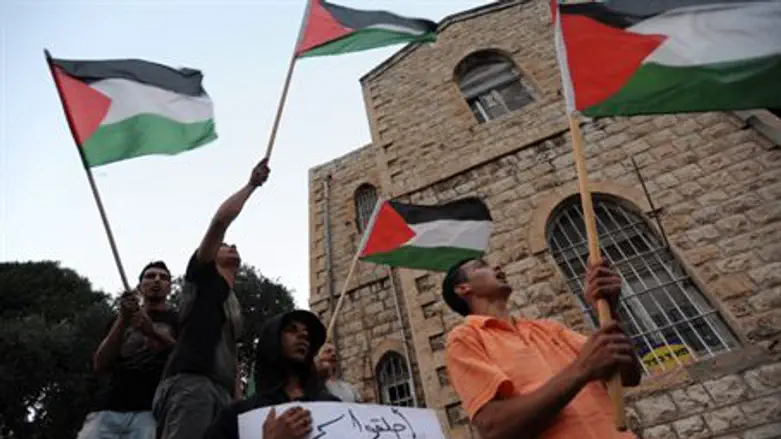
Arabs with Israeli citizenship and their leftist supporters marked the ten-year anniversary of the October 2000 Arab riots on Friday. Ten years ago, Arab citizens rioted throughout Israel, attacking police officers and Jewish drivers and civilians. One Jewish man, Bechor Jean, was murdered by Arabs who hurled a rock at his car from an overpass near Haifa. There were many other attempted lynchings and major roads were blocked for several days as Arabs living within the pre 1967 borders of Israel ran amok, burning cars, banks and post offices, toppling traffic lights and damaging all signs of Israeli sovereignty.
Thirteen Arab men were killed in clashes with police, who were unprepared for the seditious uprising and vastly outnumbered.
The uprising coincided with the launching of an unprecedented, barbaric terror war by Hamas and Fatah, as ordered by then-PA chief Yasser Arafat. The terror war utilized suicide bombers, shooting sprees and other techniques to deliberately strike at Israeli civilian men, women and children and infants. In its peak year of 2002, the terror war massacred 452 Israelis.

Israel's Left and Arab leaders portrayed the Arab rioters as victims and said the police had no right to fire at them. A commission of inquiry was appointed by the government and ended the careers of several top police officers.
Arabs in Israel marked the tenth anniversary of the uprising with a general strike, shutting down schools, town halls, and businesses for the day, and holding a rally in the Galilee town of Kfar Kana on Friday afternoon.
Relatives of the 13 Arabs who died in the riots and several leaders of the Arab community were guests of honor at the Kfar Kana event. Smaller events were be held in other Arab cities and towns.
MK Taleb As-Sana (Raam-Taal) warned that future riots are likely. He blamed any future riots on police, who he accused of “hostility toward Arab Israelis,” and on “the crisis and disappointment in the Arab Israeli community.”
Israelis still have not come up with a name for the war and often use the Arab name, "Second Intifadah". There is no official end date for the war and no memorial day for the war's victims, either. Some bitterly call it the Oslo War, in an allusion to the Oslo Accords which did not bring Israel closer to peace, but allowed the PLO's terrorists and their henchmen into the Land of Israel after decades of exile.