
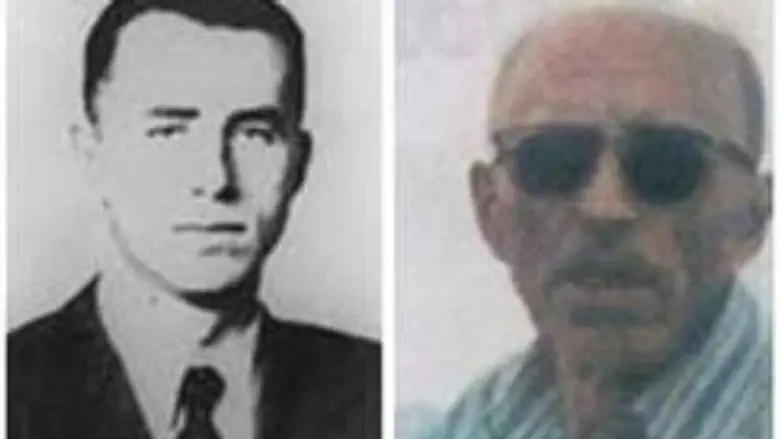
Greece is set to repeal a law and open the way to try to extradite Alois Brunner, Eichmann’s aide who was last seen alive in Syria in the 1990s, according to the country’s Katherimini web site. Several unconfirmed reports said he died in the late 1990s.
In 1959, Greece surrendered the right to prosecute Nazis, but an amendment to the legislation is expected to be submitted to Parliament this week.
Assuming the law will be changed, the Jewish community will press officials to extradite Brunner, whose current fate is unknown. If alive, he would be nearly 98 years old. Brunner was responsible for sending 50,000 Jews from Thessalonica to their deaths.
Changing the legislation would be a “moral victory” inasmuch as most Nazi war criminals have died, David Saltiel, the chairman of the Central Board of Jewish Communities in Greece told Katherimini.
Brunner was born in Austria in 1912, joined the Nazi party in 1931 and quickly rose in the ranks to become the private secretary of the notorious Adolf Eichmann. Brunner organized the persecution of Jews and sent nearly 50,000 Austrian Jews to concentration camps. He later organized the deportation of Greek Jews.
After being transferred to France, he sent approximately 25,000 Jews, including women and children, to the Auschwitz death camp.
Despite his being one of the worst Nazi war criminals, he found work after World War II as a private agent for the U.S. Central Intelligence Agency (CVIA), which paid him millions of dollars for his services.
Brunner told an interviewer in 1987 that his one regret was that he did not murder more Jews. "The Jews deserved to die. I have no regrets. If I had the chance I would do it again," he stated.