

The first to feel the pinch if we call off National Service would be the lower classes, schools, and especially special education. It would also be a very sad blow to a national enterprise that has been in operation for over 40 years, integrating all sectors of the population. A strike by 1,000 National Service girls working in schools across the country has been averted, after a series of political meetings got the Finance Ministry to cough up the money.
The final agreement was hammered out late Saturday night, due to the direct intervention of MK Ze’ev Elkin (Likud) and the Minister of Science and Technology, Rabbi Prof. Daniel Herskovitz, who heads the Jewish Home party.
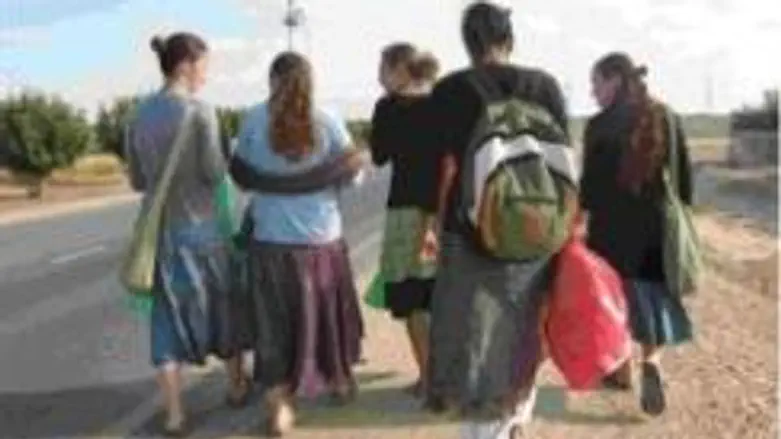
National Service (Sherut Leumi) refers to the official voluntary work undertaken for a year or two by those who have been exempted from serving in the army. The vast majority of the some 3,000 volunteers are religious-Zionist girls, though some are males and/or Arabs. About a third of them volunteer in schools, both religious and non-religious, while others perform their National Service in hospitals, field schools, special education, work with the elderly, and more.
Last week, the four National Service associations – Bat Ami, the Association for National Voluntary Service, Shlomit and Aminadav – wrote to Minister Herskovitz, who oversees the National Service program, and to Prime Minister Binyamin Netanyahu. They explained that under the current circumstances, they would have to call off their school programs as of this coming Wednesday. The reason: The Finance Ministry had not yet paid out the 45 million shekels that the programs cost.
"The first to feel the pinch if we call off National Service," they wrote, "would be the lower classes, schools, and especially special education. In addition to the social harm, it would be a very sad blow to a national enterprise that has been in operation for over 40 years, integrating all sectors of the population."
The four organizations said they were able to pay part of the monies themselves, but that their wells had now run dry. The unpaid money includes rent for apartments so that the volunteers can reside in their place of work, in-town transportation, 799 shekels ($215) per month per volunteer for living expenses, and more. The volunteers, who often work six days a week, receive free inter-city bus and train transportation, as do IDF soldiers.
Minister Herskovitz met with the Prime Minister’s Chief of Staff, Eyal Gabbai, on Thursday, and reported that an agreement had been reached for the transfer of the necessary funds. The Finance Ministry, however, apparently did not feel obligated by this arrangement, and the situation essentially remained unchanged.
Speaking with Arutz-7’s Hebrew newsmagazine on Monday, coalition whip MK Elkin said he told Netanyahu and Finance Minister Yuval Steinitz that he would like to help reach a solution. “National Service is something that crosses party lines," Elkin said, "and it was clear that a solution would be found; we just had to find the right budgetary sources. Ever since [former Labor party Education Minister] Yuli Tamir’s cut to National Service school programs, the money has been hard to come by… We had a few meetings, including late Saturday night, and in the end, the Finance Minister instructed his staff to allocate all the money to the Education Ministry immediately.”
Minister Herskovitz explained, “The reason we have to fight for this money is because National Service is not an intrinsic part of the national budget; the funding is rather based on coalition promises, to which the Finance Ministry does not feel obligated.” This is similar to the claim made by the hareidi-religious parties regarding their need to fight every year for funding for their educational networks.