
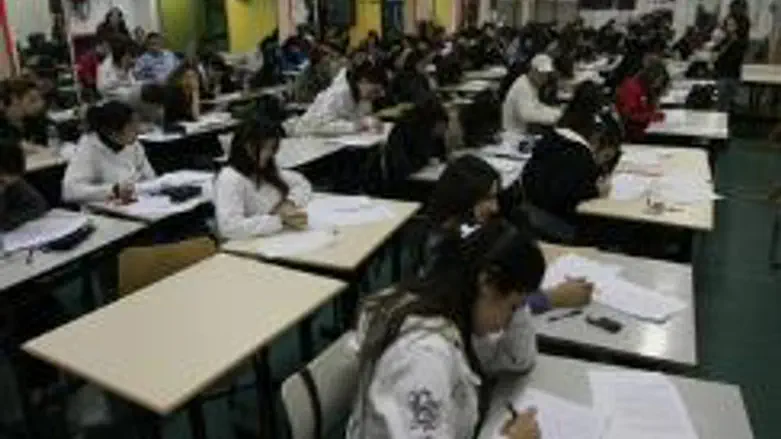
A survey presented Wednesday by the Educational Television channel shows that the overwhelming majority of Israelis opposes plans to cut the national education budget. In addition, the majority of the public feels that education in Israel is currently substandard.
The survey, conducted by the Geocartographia polling institute, was presented just two days after the Education Ministry, local municipalities and teachers' unions announced that they would campaign against the budget cut.
The Education Ministry could lose over NIS 750 million from its annual budget if the cut were to pass a Knesset vote. Ministry officials warned Monday that the cut could force schools to fire more than 5,000 teachers.
According to the poll, Israelis are pessimistic regarding the current state of national education. Only 10 percent rated Israel's school system as “good,” while 47 termed it “mediocre,” and 39 percent went further and called it “not good.”
Respondents gave teachers bad grades as well: only 20 percent said teachers in Israel are generally good at what they do, while 49 percent said they were mediocre and 22 said they performed badly.
Despite the negative feedback regarding teaching, the plurality of respondents – 29 percent -- said they believe the low salary given to teachers is the primary cause of problems in the school system. Other popular explanations for poor school performance were inadequate teachers and the high student to teacher ratio.
Comptroller: Previous Cuts Hurt Children
Also on Wednesday, State Comptroller Micha Lindenstrauss released a report regarding the Education Ministry's welfare budget. The report found that cuts to the welfare budget hurt kids, leaving many children at risk without proper help or supervision.
The Education Ministry's welfare budget, which was slashed by over 15 percent in the past decade, provides truant officers and other professionals to children determined to be in need or at risk of leaving school. While the budget fell, the number of children defined as “at risk” has increased by more than 40 percent since 2001.
The combination of budget cuts and an increasing number of children in need meant that hundreds of thousands of kids at risk did not get the help they needed, Lindenstrauss determined. In order to provide for all students at risk, the ministry would need to hire at least 2,800 more truant officers, he said.