
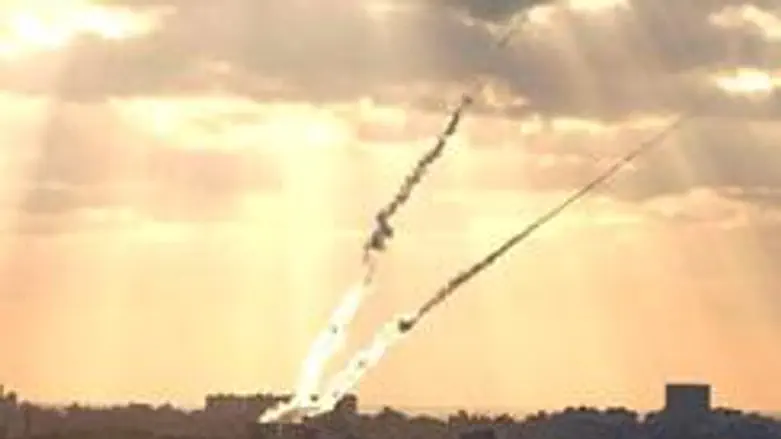
Arab terrorists violated the two-month-old temporary ceasefire Tuesday night with the 43rd Kassam rocket on the western Negev since the truce went into effect on June 19. Defense Minister Ehud Barak retaliated by ordering that all Gaza crossings be closed, hours after announcing the reopening of the Kerem Shalom crossing.
The rocket exploded in an open area in a kibbutz west of Sderot, and there were no injuries or damage. But the sirens sent everyone in the region running for cover. Dozens of mortar shells also have been fired on Israel in the past eight weeks, in violation of the agreement, but Israel has not carried out any counterterrorist operations. 
Dozens of mortar shells also have been fired on Israel in the past eight weeks, but Israel has not carried out any counterterrorist operations.
The Gaza crossings were re-reopened this week following previous retaliatory measures aimed at discouraging Arab terrorists from continuing the attacks on Israel, which began nearly eight years ago with the beginning of the Oslo War in September 2000.
Defense Minister Barak said the crossings will remain closed until Thursday, when the situation will be reexamined. Gaza residents have been able to circumvent the crossings by receiving goods and merchandise smuggled through a large network of tunnels underneath the Philadelphi Route, which includes the city of Rafiah that straddles the Egyptian-Gaza border.
One Israeli blogger wrote that when the Gaza residents are forced to use the smuggling tunnels between Gaza and Egypt which are controlled by the Hamas, they pay a toll fee for each load of supplies. Such that the closures of the Gaza crossings not only do not deter the terrorist factions, but they encourage them to fire more rockets to bring about further closures, to bring in more funds to the Hamas coffers.
Alon Shuster, chairman of the Sha'ar HaNegev Regional Council where the latest rocket struck, reiterated charges that government is not making a sufficient effort to protect area residents, particularly in terms of fortifying public and private buildings.
"Even if there were total calm, my mind wouldn't be at rest," he said. "I still believe that the government is not doing all it needs to be doing in terms of fortification. Even the ongoing budget debates should not interfere with the fortification efforts."