

Canadian Jewish groups are asking the country’s New Democratic Party (NDP) not to give in to a move by a group of party member trying overrule the party leader's support of the International Holocaust Remembrance Alliance (IHRA) Working Definition of Antisemitism.
A group of “party radicals” are in the process of attempting to overturn NDP leader Jagmeet Singh’s “principled support” for the definition, said the Centre for Israel and Jewish Affairs (CIJA), a Canadian Jewish advocacy organization. They have drafted a motion to be brought to the floor at the party’s policy convention that would rebuke Singh’s support of the IHRA definition.
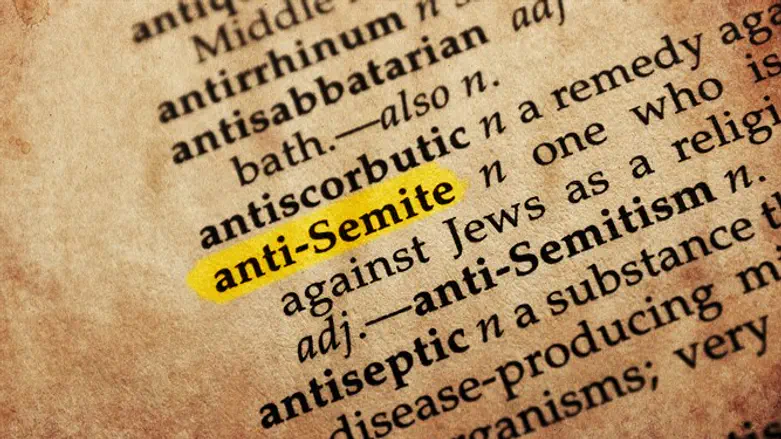
The Working Definition of Antisemitism is a 38-word statement outlining how to define Antisemitism that has been widely adopted by political parties and groups across the globe.
In a letter, written on behalf of many Jewish organizations across Canada, CIJA implored the NDP to continue to support the IHRA definition.
“We write to you today on behalf of many Jewish organizations in Canada—community centres, synagogues, youth groups, social-service providers, and educational institutions—who believe that the International Holocaust Remembrance Alliance (IHRA) working definition of anti-Semitism is an important tool in the fight against this worrisome trend,” they said. “We are concerned about the recent efforts of fringe organizations to delegitimize this definition, distort its intent, and scaremonger about its reach and its impact.”
B’nai Brith Canada also issued a statement imploring Singh not to give in to the motion. “We urge Mr. Singh to ensure that resolutions rejecting the IHRA definition of anti-Semitism are, themselves, rejected. This definition is critical for addressing the growing antisemitism in our midst. Indeed, it should be forthrightly accepted by the New Democratic Party as a signal of reassurance to Canadians generally and to Canada’s Jewish community in particular,” said Michael Mostyn, B’nai Brith Canada’s executive director.
The NDP is a social democratic party that is generally considered Canada’s third party federally, although at times it has been the official opposition, and it has formed governments provincially.