
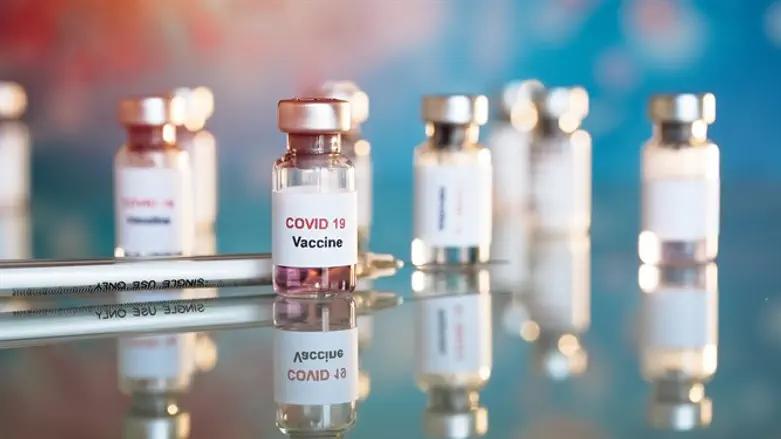
Pfizer and BioNTech are confident they can have a vaccine against the novel coronavirus ready for regulatory approval by the middle of October or early November, BioNTech CEO and co-founder Ugur Sahin told CNN on Tuesday.
"It has an excellent profile and I consider this vaccine ... near perfect, and which has a near perfect profile," Sahin told the network in an exclusive interview.
US drug giant Pfizer and German firm BioNTech say they plan to provide 100 million doses of their vaccine candidate, BNT162, by the end of the year, and up to 1.3 billion doses in 2021.
In July, the US Department of Health and Human Services and Department of Defense announced a $1.95 billion agreement with Pfizer to produce 100 million doses of a COVID-19 vaccine. The deal also allows the US government to acquire an additional 500 million doses.
Sahin told CNN he believes that approval for emergency use will be granted quickly by regulatory authorities, adding that the company's "understanding of the mode of action, in combination with the safety data coming in from the running trial" meant that they have "a lot of confidence" in it.
"Yes, we believe that we have a safe product and we believe that we will be able to show efficacy," he said.
Antibody responses in both young adults and the elderly have proven to be strong so far, with minimal side-effects, said Sahin.
"We don't see frequent fever. So only a minor proportion of participants in this trial have fever," he added. "We see also much lower symptoms like headache or like feeling tired. And the symptoms that are observed with such vaccines are temporary, they are usually observed for one or two days and then are gone."
But while BioNTech and Pfizer say approval could happen by mid-October, federal officials have told CNN they believe this is an optimistic timeline.
"I don't know any scientist involved in this effort who thinks we will be getting shots into arms any time before Election Day," an official who is familiar with Operation Warp Speed, the federal government's effort to develop coronavirus vaccines, previously told CNN.
Sahin’s comments come a day after AstraZeneca, which is working on another vaccine, paused a late-stage trial of vaccine candidates after a suspected serious adverse reaction in a study participant.
Meanwhile, Moncef Slaoui, the chief adviser to Operation Warp Speed, told NPR last week that it is "extremely unlikely, but not impossible" that a Covid-19 vaccine could be authorized for emergency use by the US Food and Drug Administration before the end of October.
The study is testing a COVID-19 vaccine being developed by AstraZeneca and University of Oxford researchers at various sites, including the United Kingdom, where the adverse event was reported.
US President Donald Trump recently estimated that a vaccine for coronavirus may be produced ahead of the US presidential election on November 3.
Last week it was reported that the Trump administration has urged US states to get ready to distribute a potential COVID-19 vaccine by November 1.