

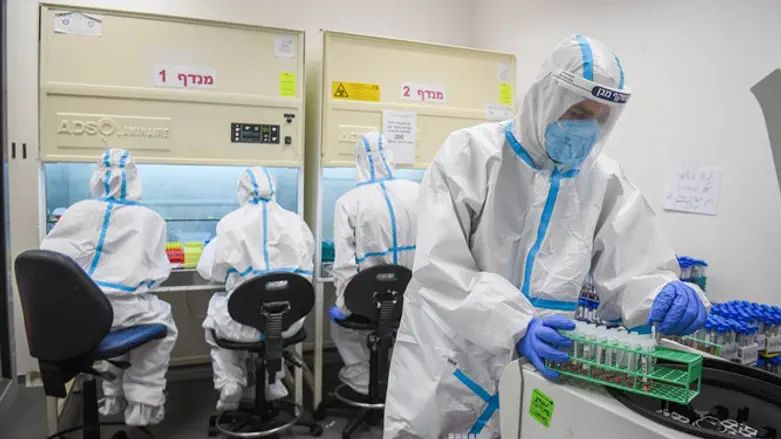
Jerusalem Mayor Moshe Lion explained the reasons for the huge increase in the coronavirus infection rate in the capital over the past weeks.
"They're talking about infections in Eastern Jerusalem and our haredi neighborhoods in the same breath. It's funny how they do that – the city's haredi neighborhoods have actually seen a reduction in morbidity," he said.
"In Eastern Jerusalem, there are approximately 2,000 virus cases, while in Jerusalem's haredi neighborhoods, there are some-800 in total. You can't compare between the two," pointed out the mayor.
Earlier in the day, it was reported that according to new data released by Israel’s Central Bureau of Statistics, Israel's economy shrank by 7.8% in the second quarter of 2020, equaling the worst economic contraction suffered by the Jewish state in its 72-year history.
Private consumption, which plummeted by an annualized rate of 24 percent in the first quarter, fell 43.4% (annualized) in the second quarter.
Exports fell 29.2% (annualized), while, imports fell by nearly 42%.
Prime Minister Binyamin Netanyahu discussed the state of the Israeli economy at the weekly cabinet meeting, stating that the economy could have been hit far harder by the coronavirus crisis. Netanyahu pointed out that much of Europe has suffered an even sharper decline.
“We just received very good economic news. The Central Bureau of Statistics published that the decline in our GDP in the second quarter of 2020 was 7.8%, which is half the decline in the European states; and almost the lowest in the world. South Korea is ahead of us and maybe two or three other countries," noted the Prime Minister.