
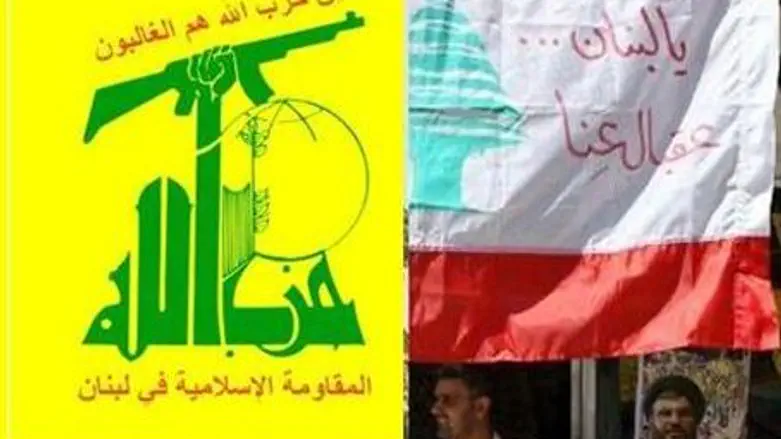
Hizbullah's black-clad terrorist militia are training to take over Beirut’s airport and highways and carried out dry-run maneuvers early Tuesday as Beirut residents fled in panic, Lebanese media reported. Meanwhile, Saudi Arabia said it is throwing up its hands in the effort to help stability, adding, ”Lebanon is dangerous.”
Hizbullah’s army early Tuesday carried out exercises, without weapons, aimed at taking control of Beirut’s airport, major highways and the seaport. The drill spread fears of a return to the violent street violence that nearly set off a new civil war two years ago. Reports stated that schools closed and people kept their children off the streets.
Iran’s semi-official Fars News Agency quoted a retired Lebanese general saying that the next prime minister of Lebanon may come from the ranks of Hizbullah, which is backed by Iran and allied with Syria.
The IDF has heightened its alert along the border between Israel and southern Lebanon, where Hizbullah has stockpiled at least 60,000 missiles. A Lebanese newspaper reported that Hizbullah forces might attack United Nations posts.
Hizbullah toppled the government last week by quitting the coalition on the eve of the presentation of findings of a United Nations tribunal. The tribunal submitted a sealed indictment, whose contents will not be known for several weeks. A Belgian judge is studying the case to determine if there is enough evidence for a trial of Hizbullah leaders suspected of involvement in the bloody 2005 assassination of former Lebanese Prime Minister Rafik Hariri, who was fiercely opposed to Syrian control of the country that had been wracked by civil war for 15 years.
His son, Sa'ad Hariri, now heads the caretaker government and has allied himself with Syria. Hizbullah hopes to pressure him into rejecting the United Nations report.
Although Saudi Arabia has given up hope of helping to achieve political stability in Lebanon, the foreign ministers of Qatar and Turkey visited Beirut for talks with Lebanese officials, a day after Syria hosted them.