
Be strong and courageous!
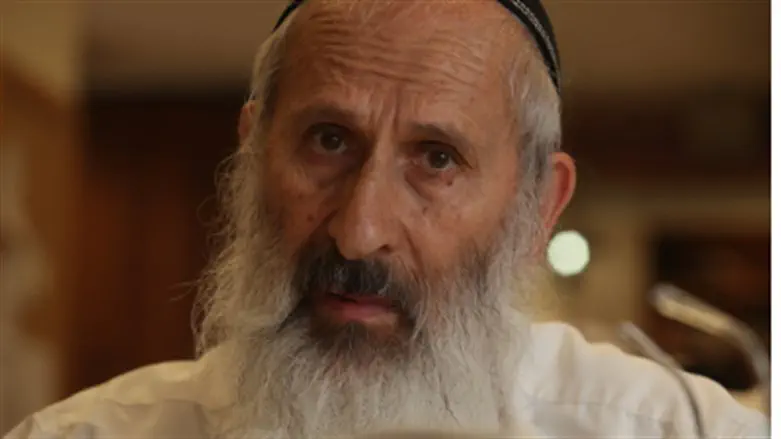
HaRav Shlomo Aviner is Head of Yeshivat Ateret Yerushalayim
The Divine Command to sacrifice Yitzchak shattered the moral foundations of Avraham’s life. He who had fought uncompromisingly against idolatry and human sacrifice, he who epitomized the loftiest morality and kindness, was about to murder his own son! He was thus going to violate the most basic and logically obvious moral dictate that existed, “You shall not murder."
There are three crimes that are so heinous that according to the halakha one must be willing to die rather than to transgress them. They are idolatry, immorality and murder. And yet Avraham was on his way to murder his son! Avraham rightly felt that his “hypocritical" betrayal of the very ideals that he had preached to the world would destroy all his educational achievements. Past, present and future were about to be obliterated at one blow! These are the morbid thoughts that the evil inclination implanted in Avraham’s mind to dissuade him from performing G-d’s will.
The Akeidah constitutes the rejection of man-made morality, replacing it with a Divine Command. Avraham had to forgo even his highest and loftiest ideals, thoughts, and aspirations and substitute them with one single ideal, performing G-d’s Will. This is a dramatic demonstration that we do not observe G-d’s mitzvot because they are intelligible and beneficial but because they are the word of Hashem.
We do not differentiate between the pleasant mitzvah of putting on Tefillin and the less enjoyable mitzvah of wiping out the memory of the Amalek. Both are equally dear to us. We refrain from eating pork not because the taste it is loathsome to us but because we have been thus commanded by Hashem. We must obviously try to elevate ourselves to the level that we feel delight in performing the mitzvot and repugnance at the very thought of a sin. This can require constant inner struggle.
Indeed it is hard work. While it should be self-evident that enjoying prayer, disgust at eating pig, and repugnance at the very thought of murder and similar emotions are proper and worthy feelings, the evil inclination uses all of its wiles to convince us otherwise. Based on the guidelines of the Torah, man advances and senses what is right and wrong. We must understand, however, that morality is not determined according to what man knows, feels, or understands but it is based purely on the Word of the Lord. The Akeidah came to uproot an ethical system which emanated from man, and to build in its place a firmly based Divine System of morality.
Naturally, Yitzchak was not sacrificed in the end. The Akeidah concludes with the verse, “Do not harm the boy. Do not do anything to him." It could not finish any other way since murder is prohibited. What has been achieved is that the precept “You shall not murder" has been converted from a humanly-based imperative that can vary and change according to human motions and understanding, to an eternal, immutable and Divine Command. Once this understanding is firmly rooted, man is called to raise himself spiritually and to feel the pleasure and delight in performing G-d’s absolute will.
Be strong and courageous. Hazak v’amatz.