
The celebrated first Chief Rabbi of pre-state Israel, Rav Avraham Yitzchak HaCohen Kook (1865-1935) is recognized as being among the most important Jewish thinkers of all time. His writings reflect the mystic's search for underlying unity in all aspects of life and the world, and his unique personality similarly united a rare combination of talents and gifts.He was the undisputed leader of Religious Zionism, defining the Jewish People and the Land of Israel as entities with specific commandments in the Torah of Israel, a construct known as Torat Eretz Yisrael.
Rav Kook was a prominent rabbinical authority and active public leader, but at the same time a deeply religious mystic. He was both Talmudic scholar and poet, original thinker and saintly tzaddik.
Zalman Shazar, the third president of the State of Israel, was a childhood friend of Rav Kook’s most prominent disciple — Rabbi David Cohen, known as the Rav HaNazir. Shazar and Rabbi Cohen both relocated to Jerusalem, where they renewed their former friendship.
Below is Shazar’s description of an extraordinary encounter that took place during Elul, the month of reflection and repentance leading up to Rosh Hashanah:
When I rediscovered Rabbi David Cohen in Jerusalem, he was steadily ascending in the world of mysticism and silence. One day in Elul, I went to visit him in Rav Kook’s house. It was before the High Holidays, and I wanted to absorb some of his spirit of purity and holiness.
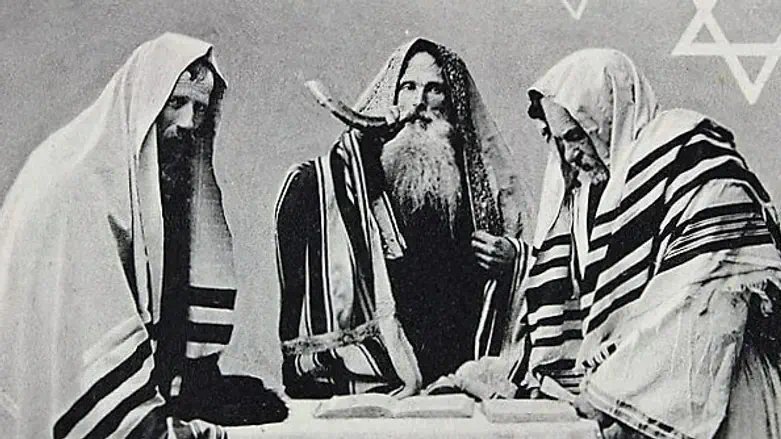
Upon arriving, I was informed that the Rav HaNazir was in Rav Kook’s study. The rabbis were reviewing the kavanot, the special Kabbalistic intentions for blowing the shofar on Rosh Hashanah.
I summoned the courage, and allowed myself to peek into the room. I froze at the sight, utterly mesmerized.
The two scholars were both standing, eyes shut. Rav Kook called out the sounds — tekiyah! shevarim-teruah! tekiyah! — and Rav David blew the shofar.
But these were no ordinary shofar blasts. The blasts sounded as if they originated from another world.
I felt that I was hearing the shofar of our redemption. In my mind’s eye, I saw the words of the daily prayer, “Sound the great shofar for our freedom; lift up the banner to bring our exiles together.” This was the messianic shofar, announcing the ingathering of the exiles!
I was shaken to the very depths of my soul. That holy sight, and those inspiring sounds, will be forever engraved in my memory.
(Stories from the Land of Israel. Adapted from Mo'adei HaRe’iyah, pp. 61-62)