

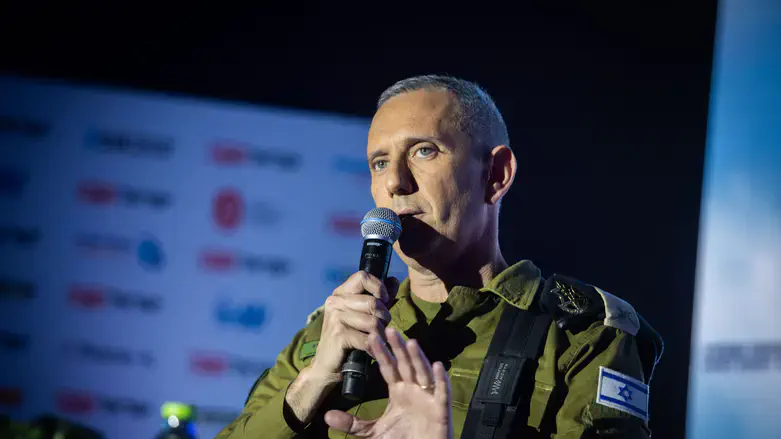
IDF spokesman Daniel Hagari on Wednesday morning spoke to Yediot Aharonot and Ynet about the IDF's targeted operation in Rafah, and the war against Hamas in Gaza.
"I see the greatest challenge in the role I am in right now," he said. "It is very different, but it is a battlefield in itself. There was a panel which discussed advocacy. I am a commander of a large battle - it is not a one-man show, it is hundreds of officers, soldiers, who are standing at the forefront of advocacy."
"We took an operational plan for the war for approval by the political echelon. Within this plan, we mapped out the war, which was estimated to be about a year of fighting. Within this year, we saw that we would first of all deal with Hamas' greatest centers of power, which are mostly in northern Gaza and Khan Yunis. Gaza is perhaps one of the most difficult battlefields in the world, in terms of its population density and the tunnels which Hamas dug underground."
When asked about the Rafah operation, which was delayed until this week and is still limited to only targeted activities, Hagari said, "The operational conditions necessary to carry it out did not exist."
"We will deal with Rafah in the way which is right for us. I want to tell the public, so that they do not delude themselves: Even after we deal with Rafah, there will be terror. Hamas will move northwards and try to reconstitute itself, even in the next few days. In every place Hamas returns to, including in northern and central Gaza, we will return to operating."
When asked about the new appointments at the higher levels of the IDF, and whether it would have been appropriate to wait for an organized investigation into the October 7 massacre, Hagari explained, "The IDF's most important challenge is the public's faith. Because of this I am sitting here now, and I think that what happened on October 7 requires us to be even greater humility, and also to know how to accept criticism."
"After the failure as well, we took responsibility. The Chief of Staff took responsibility. We also understand the significance of this responsibility. Alongside the responsibility, we also have authority. The one leading the war is the Chief of Staff, and alongside the responsibility that he took, he also has the authority to make appointments to the IDF, so long as it happens in a transparent, relevant, and organized fashion."