
Four chapters after we’ve been introduced to Moshe – after we’ve read about his birth, his heroic rescue of a Jew in distress, his escape to Midian, his marriage to Tzipporah, his encounter with G-d at the burning bush, and his appearance before Pharaoh – the Torah suddenly, and awkwardly, stops to share Moshe’s genealogy with us (Shemos 6:14-25). Why?
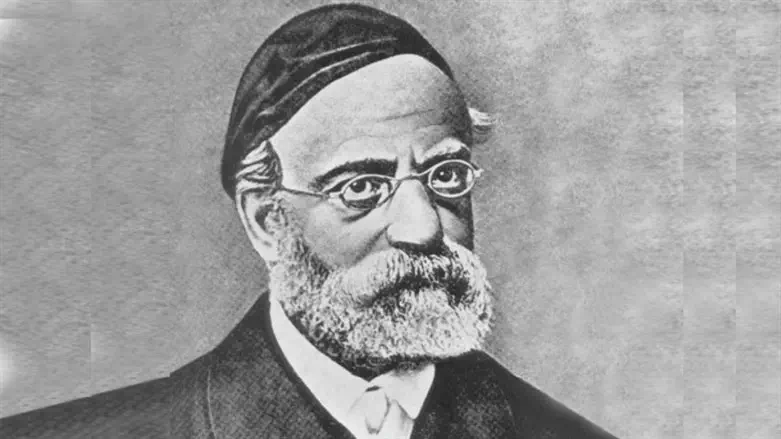
Rav Samson Raphael Hirsch explains:
Parshas Va’eira is a turning point. Moshe finally gains the upper hand with Pharaoh and the Exodus process commences. Moshe’s ultimate triumph, however, could mislead future generations. For “on account of [his] ‘godlike’ deeds” in liberating the Israelites, we might be tempted to ascribe “a ‘godly’ origin” to him.
Indeed, we “know well enough how, in later times, a Jew whose genealogical table was not available – and because it was not available and because he brought the world a few sparks of light borrowed from the man Moshe – became to be considered by nations as begotten from G-d.”
The Torah therefore wishes to emphasize to us that “Moshe was a man,” writes Rav Hirsch. People “knew his parents and grandparents, his uncles and aunts and all his cousins, knew his origin and relations, had known him for 80 years in his perfectly ordinary human nature.”
So that explains why the Torah lists Moshe’s direct ancestors in Shemos 6:14-25. But why does it also list the children of Reuven and Shimon? And why does it list Moshe’s siblings as well as those of his grandfather?
Rav Hirsch answers: To “oppose a no less pernicious delusion” – namely, that “any and everybody is suitable to become a prophet.” If that were true, a “man could be known as a complete idiot today and tomorrow proclaim the word of G-d. The spirit of G-d could suddenly descend upon an ignorant uneducated person and – lo! – he can speak in 70 languages, a phenomenon which is not without alleged instance in imaginary or pretended prophets in other circles; and then, the more ignorant, the more uneducated the prophet of today was yesterday, the greater the proof of the divinity of the call that worked this change.”
But G-d does not select such men to be His messengers. He “chooses the noblest and most suitable.” And so, in recounting Moshe’s genealogy, the Torah also lists the children of Reuven and Shimon and many of Levi’s descendants. To stress that had “G-d wished simply to pick the first comer, other tribes than Levi stood at His disposal, and in Levi other branches than Kehath, and amongst the families of Kehath, other households than Amram, and among Amram’s children there was the older Aharon.”
G-d selected Moshe specifically. For while he was not a god, he was an extraordinary human being.
Rav Samson Raphael Hirsch (1808-1888) – head of the Jewish community in Frankfurt, Germany for over 35 years – was a prolific writer whose ideas, passion, and brilliance helped save German Jewry from the onslaught of modernity.
Elliot Resnick, PhD, is the host of “The Elliot Resnick Show” and the editor of an upcoming work on etymological explanations in Rav Samson Raphael Hirsch’s commentary on Chumash.
...