

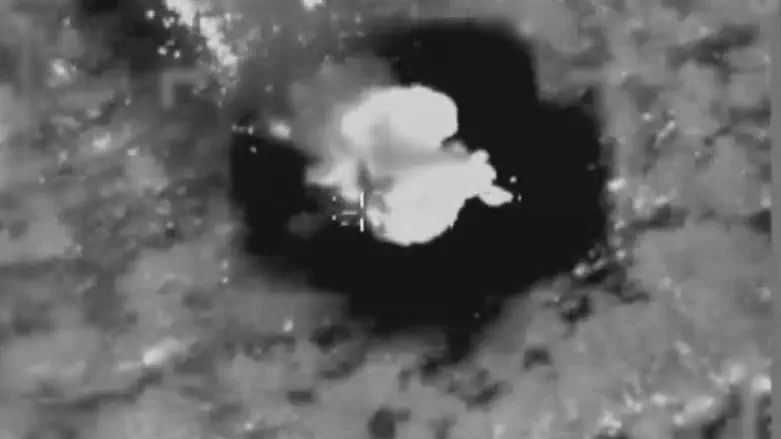
Tensions along Lebanon’s southern border have gradually been increasing between the IDF and Hezbollah, the Iranian-backed militia, and have reached almost daily exchanges of fire since Oct. 7.
Dheira, a town of 2,000 residents, has become a focal point for fighting. Residents claimed that at least four homes were incinerated, and nine civilians were injured; at least three were hospitalized, one for days.
Most residents fled the town when the shelling stopped, returning during a week-long pause in fighting and leaving again when it resumed. Uday Abu Sari, a 29-year-old farmer, reported that he was trapped in his home for five hours during the shelling and could not breathe because of the smoke. “We were instructed to put something that was soaked in water on our faces. It helped a bit, he said. “The whole village became white, and I couldn’t see my finger in front of my face.”
A civil rights group has claimed that an October attack by Israel using U.S.-supplied white phosphorus munitions in southern Lebanon should be investigated as a war crime. The Pentagon requires partner militaries to accept international law limitations when they accept US weapons, “that these be used only for lawful purposes such as signaling and smoke screening,”
Humanitarian law experts claim that the US is obligated to track the behavior of its allies who receive US supplies, in order to comply with US law, said. Biden’s officials claim that “The United States is not conducting real-time assessments of Israel’s adherence to the laws of war.”
The use of white phosphorus is restricted under international law because fire and smoke can be spread to populated areas. It is unclear when the US delivered the munitions to Israel as a US official reported that no white phosphorous munitions have been provided since the Oct. 7 Hamas attack.
The IDF issued a statement according to which white phosphorous shells launched by Israel are used to create smokescreens, not for targeting or causing fires, and for creating white smoke that conceals soldiers from enemy forces, as it produces billowing smoke to obscure troop movement The IDF also emphasized that the use of the weapon “is in accordance with and exceeds the stipulations of international law.”
Despite Israel’s 2013 pledge that the IDF would stop using white phosphorus on the battlefield, and instead would transition to gas-based smoke shells, Israel has used the munition more than 60 times in Lebanon’s border areas in the past two months, killing civilians and producing irreversible damage to immense areas of forests and farmland, and damaging thousands of olive trees.