

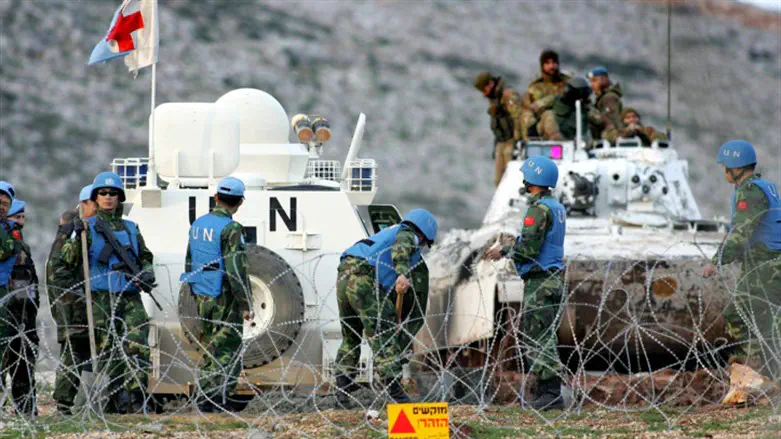
A planned United Nations vote on Wednesday to renew approval for a peacekeeping mission in Lebanon has been delayed as France, the United States and the United Arab Emirates argue over the freedom of movement of UN troops, diplomats said, according to Reuters.
The UN Interim Force in Lebanon (UNIFIL) acts as a buffer between Lebanon and Israel and operates near the border. It works to implement Security Council Resolution 1701, which ended the Second Lebanon War in 2006.
According to the resolution, Hezbollah must not be allowed to operate in southern Lebanon and the entire area of southern Lebanon must be free of any armed personnel and weapons other than those of the Government of Lebanon.
UNIFIL’s mandate is extended annually by the UN Security Council. Its current authorization will expire on Thursday.
France has drafted a UN Security Council resolution to extend the peacekeeping mission for another year, but the United States and the United Arab Emirates argue it has weakened some language on the ability of UN troops to move freely, according to Reuters.
"UNIFIL's freedom of movement is absolutely paramount at a time when tensions in the area are rising to dangerous levels," said a UAE diplomat, speaking on condition of anonymity.
UN Secretary-General Antonio Guterres told the Security Council in an Aug. 3 letter, seen by Reuters, that UNIFIL continued to face restrictions to its freedom of movement and delays in access to locations of interest.
"The Mission's ability to conduct patrols and activities independently must be maintained," Guterres wrote.
According to a draft resolution seen by Reuters, France has added language spelling out that peacekeepers should coordinate with the Lebanese government, and deleted text included in last year's council resolution that demanded all parties allow "announced and unannounced patrols" by UN troops.
US Ambassador to the UN Linda Thomas-Greenfield said talks were continuing and that the United States wanted a resolution "that strengthens UNIFIL and provides UNIFIL with what it needs to continue to operate effectively."