
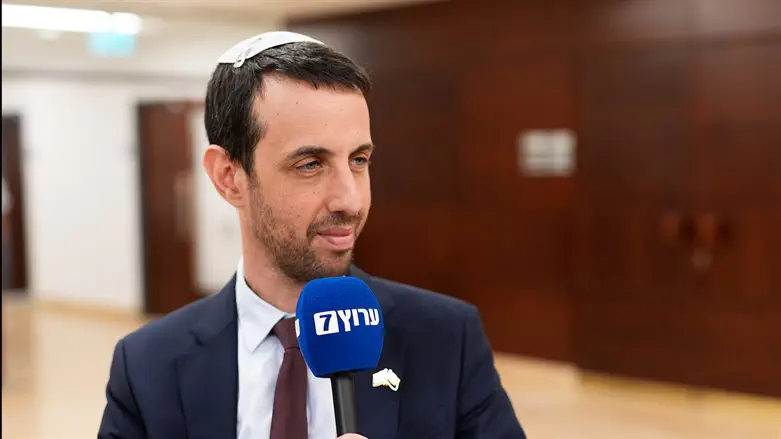
MK Ariel Kallner (Likud) on Sunday rejected claims that the calls by a number of MKs from the Likud to carry out the legislation of the judicial reform only with broad agreement are a form of an internal rebellion in the party.
"There is no rebellion in the Likud. There are different positions, but in the end, everyone wants two things: We want the reform and we want to achieve it with as broad an agreement as possible," Kallner told Israel National News.
"None of the members of the Knesset who spoke out mentioned any opposition to the essence of the reform, but rather they have a criticism of the process. Their opinion should be taken into account and addressed. There are processes in the faction, there are discussions, and in the end, everyone is bound by the decision of the faction," he added.
Kallner noted that "even though we came out with the reform in January, after we received a mandate in November, and Yariv Levin was transparent and revealed to the public all the issues of the reform, after three months the Prime Minister decided to stop in order to negotiate. We reduced the reform, made various proposals to the opposition, and unfortunately, we did not receive a response. In a democratic country, it is impossible to live under a veto by the opposition. Now there is an excellent opportunity, during the recess when there is no legislation, for the opposition to present to the public and to us what changes are acceptable to them and will benefit the State of Israel. It is possible to reach broad agreements because in my opinion the gaps are not large."
Kallner urged the opposition not to place the responsibility only on the government - but to work together with it in order to reach a solution.
"I think the opposition needs to understand that it also has responsibility for what is happening in the country. You can't disagree all the time and you can say what you do agree to. We have a public demand that we legislate and make corrections in the judicial system. We want to make those corrections with the widest possible consensus and, if necessary, we will compromise on certain issues - because it is better to fulfill 70% of the dreams with broad agreement than 100% when a large part of the people feel that they have been trampled on or hurt. We will not compromise and we will not give up unilaterally because then, in the end, they will say that we are bringing about the end of democracy and we will pass things that we do not believe in with all our hearts."