
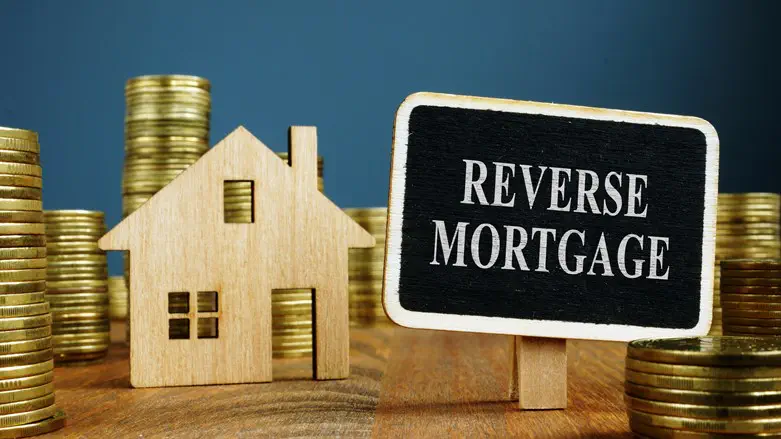
A reverse mortgage is a financing option sold to many senior Israeli homeowners, but it is important that they understand how it works.
In Israel, the Banking Supervision Department of the Bank of Israel regulates these products. Just like any aspect of the economy, policies governing it are bound to change from time to time.
What is a Reverse Mortgage?
A reverse mortgage is a special type of loan which is only accessible to Israeli who are at least 60 years old.
The property is used as a security for the loan and may not require monthly repayment.
Instead, the loan and interest are only due upon the death of the last borrower, whereby the heirs may have the right to repay the loan, or the bank sells the property to recover its money.
Homeownership in Israel
Unlike the United States, where 57.2 percent of households own their own homes, in Israel, it is as high as 70 percent.
This is despite the high rate of Israeli housing prices. In July 2011, the average cost for a four-room apartment was about $450,000.
A 2020 study by Compare The Market Australia disclosed that Israel was rated as the second least affordable country for housing, with each square meter (10.8 square feet) of housing space costing the equivalent of 26.6% of the average Israeli household’s annual disposable income.
In June 2021, the average price for a four-room apartment significantly spiked to about $682,608, while analysts expect a further rise, according to a report by the Alrov Institute for Real Estate Research at Tel Aviv University’s Coller School of Management.
The high real estate value means homeowners can access more funds whenever they apply for a reverse mortgage.
Reverse Mortgage Policies
Israeli are familiar with reverse mortgages. Private lenders have facilitated it for many years.
A 2006 press statement by the Bank of Israel announcing the end of the tenure of former Deputy Governor, Dr. Meir Sokoler, stated he was “among those who devised the inflation-target regime and one of the initiators of the reverse mortgage (2003)”.
In 2014, former Housing Minister, Uri Ariel, proposed a government-backed reverse mortgage program that would supply homeowners with a monthly income.
As of 2020, the Bank of Israel, in a move to ease the mortgage burden, mandated that a third of any mortgage be repayable with a variable interest rate linked to the prime rate. The remaining two-thirds are repayable at a fixed rate.
Meanwhile, in 2022, the Banking Supervision of the apex bank, headed by Yair Avidan, published a circular to regularize reverse mortgages.
According to the circular, a reverse mortgage will be allowed up to 50 percent of the home's value.
The document also noted that despite reverse mortgage being designed for elderly homeowners, it is now leveraged to finance homes for heirs.
Requirements for Reverse Mortgage
In countries like the US, citizens must be 62 years old and above to qualify for a reverse mortgage loan. However, in Israel, lenders will consider a senior who is at least 60 years old.
Aside from the age restriction, lenders might have different criteria for assessing loan candidates.
Below are the requirements most banks and private lenders consider
- The borrower must live in the home used as collateral. In an instance whereby the borrower is moved out of the home to an assisted living facility or nursing home, the lender may take over the property to recover its loan.
- You must own substantial equity in the home, about 50 percent.
- The home must be owned outright or has a low mortgage. It is possible to pay off an existing mortgage with a reverse mortgage.
- You must be able to afford property charges and taxes during the loan term. If you are not financially buoyant for such, part of the reverse mortgage loan can be set aside to cater for that.
- Your home needs to be in good shape. A lender may request you make some repairs before it can be valued.
How To Calculate Reverse Mortgage
Lenders consider different factors when estimating the reverse mortgage loan, they can offer a homeowner.
The major factors considered are age and home value.
Typically, people who are 60 years old get a loan of about 15 percent of their property value. Homeowners who are 65 years old are eligible for a loan of about 20 percent of the appraised value.
At the age of 80, lenders can offer amounts up to 35 percent of the property, while 90 years old landlords can get as much as 50 percent.
You can use a Reverse mortgage calculator to get a real-time estimation of how much you can receive based on the value of your home. The calculator also considers other factors used by most lenders in assessing your creditworthiness.
Mistakes To Avoid When Applying for Reverse Mortgage
A reverse mortgage is a financial decision that can affect your family because any mistake would be carried over to your heirs when you are gone.
Requesting too much
Your home value is crucial in the amount of reverse mortgage a lender will be willing to offer you.
The equivalent equity in the home secures the loan, which is expected to be repaid with interest and fees.
Avoid the mistake of requesting a reverse mortgage more than you need. It is best to borrow little such that your heirs can easily pay it off when you are gone while they would be able to retain ownership of the property.
Not discussing with your spouse and heirs
A reverse mortgage without your spouse as a borrower can be a problem if they outlive you or you have to move to a care facility or nursing home.
In such a case, the spouse may be forced to repay the loan to remain in the home.
It is also essential to inform your heirs about your reverse mortgage plan, which will help them prepare to handle it when you are gone.
Failure to pay property tax
Failure to pay required taxes on the home can trigger the nullification of the reverse mortgage terms, making the balance repayable in full immediately.
This could be a major problem if you cannot raise the required fund to settle the lender, as they would have no other choice than to sell the home to repay the debt, even though you are still alive.