

The board of governors of the International Atomic Energy Agency (IAEA) on Thursday passed a resolution criticizing Iran for its lack of cooperation, AFP reported.
The motion brought by the United States, Britain, France and Germany -- but voted against by China and Russia -- is the second of its kind within six months and comes during an impasse over undeclared uranium particles found in Iran.
The resolution adopted by the IAEA's 35-nation board was carried by 26 votes in favor versus two against, with five abstentions and two countries absent, diplomats told AFP.
It followed a report by the agency which concluded there had been "no progress" in a long-standing probe into undeclared nuclear material in Iran.
In the IAEA report, its Director General Rafael Grossi said he is “seriously concerned” that Iran has still not engaged on the agency’s probe into man-made uranium particles found at three undeclared sites in the country.
After the previous resolution was passed in June, Iran responded by removing surveillance cameras and other equipment from its nuclear facilities.
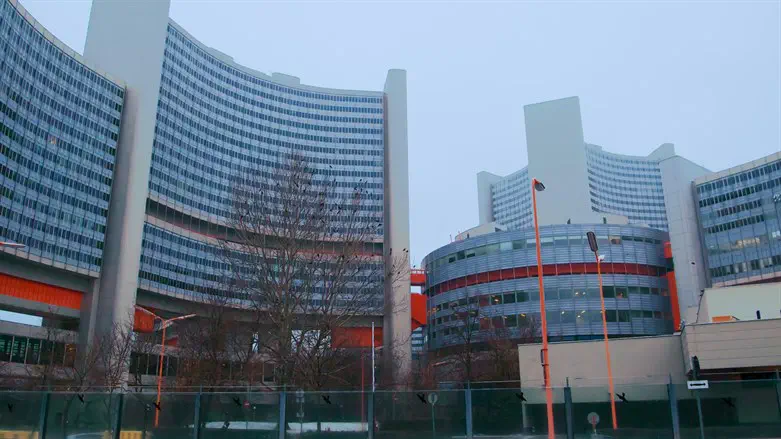
In response to Thursday’s resolution, Iran warned that it may "affect the process of our country's cooperation" with the Vienna-based IAEA.
"We firmly believe that this resolution will have no result... it is intended to justify more unilateral sanctions against the Iranian nation," said Mohsen Naziri-Asl, Iran's envoy to the IAEA, according to the official IRNA news agency.
The impasse over the agency's probe comes as wider talks to revive the 2015 nuclear deal are stalled.
Iran in September announced it had submitted its comments to the US response to the European Union’s draft for reviving the 2015 Iran nuclear deal.
While Iran’s Foreign Ministry spokesperson said at the time that Iran’s response was prepared based on a constructive approach, a senior Biden administration official said the Iranian response "is not at all encouraging.”
A US official later said that the efforts to revive the 2015 Iran nuclear deal have “hit a wall” because of Iran's insistence on the closure of the UN nuclear watchdog's investigations.
On Monday, the US envoy for Iran, Robert Malley, said Iran's crackdown on protesters and the sale of drones to Russia have turned the United States' focus away from reviving the nuclear deal.
Speaking to reporters in Paris, Malley insisted that the United States would leave the door open to resume diplomacy "when and if" the time came, but stated that for now Washington would continue a policy of sanctions and pressure.