

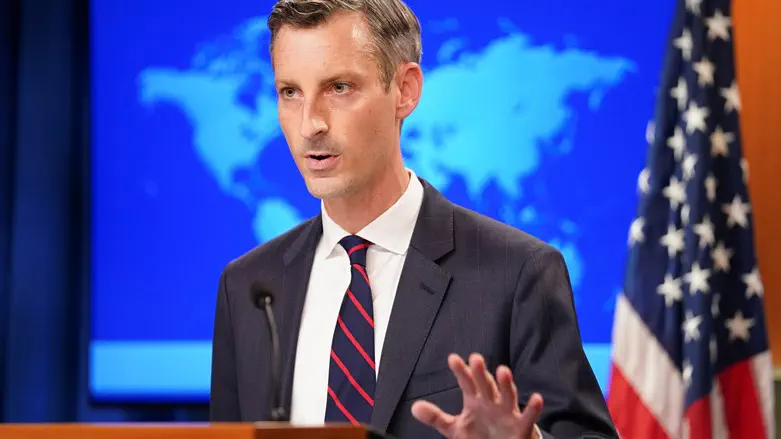
US State Department spokesperson Ned Price said on Wednesday that the Iran nuclear deal is “not our focus right now,” CNN reported.
According to the report, Price noted that the administration is instead focusing on supporting the protesters in Iran as efforts to restore the nuclear deal have hit yet another impasse.
“The Iranians have made very clear that this is not a deal that they have been prepared to make, a deal certainly does not appear imminent,” Price was quoted as having said at a department briefing.
“Iran’s demands are unrealistic. They go well beyond the scope of the JCPOA,” he said, using the acronym for the formal name of the deal, the Joint Comprehensive Plan of Action.
“Nothing we’ve heard in recent weeks suggests they have changed their position,” Price stressed.
The spokesperson said the administration’s current focus “is on the remarkable bravery and courage that the Iranian people are exhibiting through their peaceful demonstrations, through their exercise of their universal right to freedom of assembly and to freedom of expression.”
“And our focus right now is on shining a spotlight on what they’re doing and supporting them in the ways we can,” Price added.
Indirect talks between the US and Iran on a return to the 2015 deal have hit a snag in recent weeks.
Iran recently announced it had submitted its comments to the US response to the European Union’s draft for reviving the 2015 Iran nuclear deal.
While Iran’s Foreign Ministry spokesperson said at the time that Iran’s response was prepared based on a constructive approach, a senior Biden administration official told Politico, “We are studying Iran’s response, but the bottom line is that it is not at all encouraging.”
A senior European official directly involved in nuclear talks with Iran later told Axios’ Barak Ravid that Iran’s latest response to the EU’s proposal is unreasonable and indicates that the Iranians are not interested in closing a deal.
Iranian Foreign Minister Hossein Amir-Abdollahian subsequently said that Iran's position in the negotiations has not been changed, claiming that "the only obstacle to an agreement is the lack of realism and necessary determination on the part of America."
Western diplomats have said there are no active negotiations at the moment and it is unlikely that a breakthrough could happen before the US midterm elections in November.
A US official said late last month that the efforts to revive the 2015 Iran nuclear deal have “hit a wall” because of Iran's insistence on the closure of the UN nuclear watchdog's investigations.
Amid the standstill on the JCPOA, the Biden administration has unveiled a series of measures aimed at punishing the regime for its repression of the Iranian people and to try to support the protesters who have demonstrated across Iran following the death of 22-year-old Kurdish woman Mahsa Amini.
Amini died while in police custody in September after her arrest by the morality police for allegedly violating the Islamic Republic's strict dress code for women.
The street violence following her death has led to dozens of deaths, mostly of protesters but also members of the security forces.
In late September, the US announced sanctions on Iran’s Morality Police following the death of Amini.
Shortly thereafter, amid internet shutdowns by the Iranian government in the face of widespread protests over Amini’s death, the US government took a step meant to allow technology firms to help the people of Iran access information online.
Last week, the US issued additional sanctions on seven senior Iranian officials for the government shutdown of internet access and the violence against protesters, targeting Iran’s Minister of the Interior, Ahmad Vahidi, who oversees all Law Enforcement Forces that have been used to suppress protests, as well as its Minister of Communications.