
Moshe had to be convinced to assume leadership and then had to beg Pharaoh to free the Jewish People. When Pharaoh refused, God's wonders started to afflict Egypt, and the country was crippled by a long series of plagues. Finally, after the final plague, the Jewish People marched out of Egypt (– that too began at night, and they left the following day). It was not an instant salvation, but a process (perhaps that is why we spend an entire night at Seder discussing it).
Really, it was an even lengthier process than this, the picture was far larger.
After Moshe's first audience with Pharaoh, he was heart-broken and despaired before God, “Why have You sent me?! Since I have come to Pharaoh to speak in Your name, he has harmed the People, You have not saved Your People.”
God answered Moshe that his frustration was mistaken, he had no reason to despair. Rather, Moshe had to step back and realise that he was in the midst of a far larger picture, standing within a longer, historic process. The Avot stood at the beginning of the process. God had “appeared to Avraham, Yitzchak, and Yaakov” and promised them that their descendants would inherit the Land of Canaan.” The Avot never witnessed their promises being fulfilled. God Himself was waiting too (Rashi, Shemot 6:3; 12:42). Moshe was to assume a task in the middle of this process, to lead the Jewish People out of Egypt and through the desert, where they would receive the Torah. It too would be a gradual affair, in which God would first manifest Himself to all of Egypt. The Avot, centuries earlier, were at this beginning of the journey and Moshe was to continue it. “Don’t worry,” God was telling Moshe, “this will be a gradual, incremental mission; success will come but it will take time.”
This message, of success being a process, is one that perhaps underscores all of Judaism, and even nature, our own lives, and human history.
The Torah itself still does not finish with the fulfilment of Avot’s promises, the Land of Canaan was still not “established for the Children of Israel.” For that, we had to wait for the time of the Prophets, when the Jews conquered and settled the Land. Yet perhaps only with the Messianic Age will this ancient, Patriarchal promise be fulfilled.
The divine project for the world will take time. Avraham took years to draw close to God and, similarly, the Messianic era will emerge in stages (Rambam, Hilchot Avodah Zara, 1:3; Hilchot Melachim, chapters 11-12). History and our national destiny are a process. For the Rambam, the mitzvot themselves reflect this gradual, incremental journey of mankind. Some of the mitzvot served to progress and civilise us back in ancient times, uprooting idolatry and encouraging us towards Judaism, whilst others are perhaps more appropriate at later stages of human advancement (Rambam, Guide for the Perplexed, 3:32; much more needs to be said on this and, of course, for the Rambam, all the mitzvot remain eternally binding nonetheless).
In many aspects of lives, our achievements are gradual, taking time and effort to come to fruition. Indeed, as many point out, we are born as babies and only slowly develop and mature into adults. Life and nature run as a process, a slow, unfolding journey. Furthermore, we can only improve ourselves gradually. Our humble, everyday choices to do the right thing is the only way we can battle and climb up the ladder of self-perfection to become better people (Rav Dessler’s Pamphlet on Free Will). Some of the mitzvot, such as prayer, are designed to be daily and repetitive precisely for this reason, to help us to slowly inculcate values within ourselves and gradually draw us closer to our Creator (see perhaps Rambam, Guide for the Perplexed, 3:51).
That was the message God was giving to Moshe: Lead my People out of Egypt but know that this won't be an overnight success, you are part of a long process that started years ago, with My promises to the Avot when I first appeared to them. Your task will take time, requiring prayers, plagues, and a circuitous desert journey. Ultimately, it was to continue well into the future. As one American businessman remarked, “It takes years to become an overnight success.”
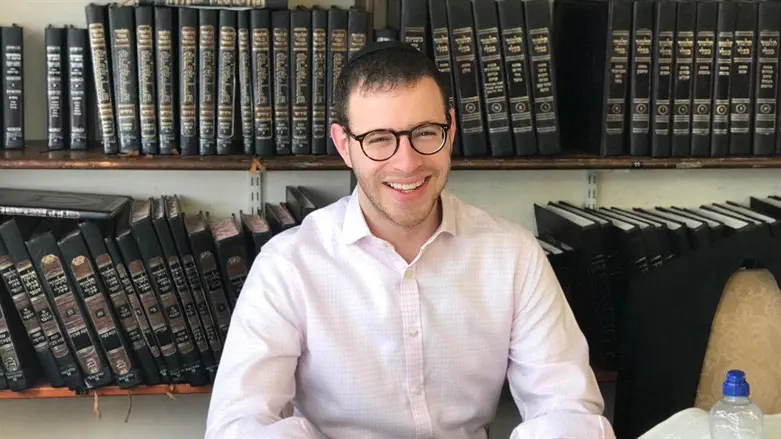
Gavriel Cohn is an Account Executive at The PR Office, a London-based Public Relations and Public Affairs company. If you would like a PDF Booklet on “Insights for Seder Night”, please email: gavcohn@gmail.com.