
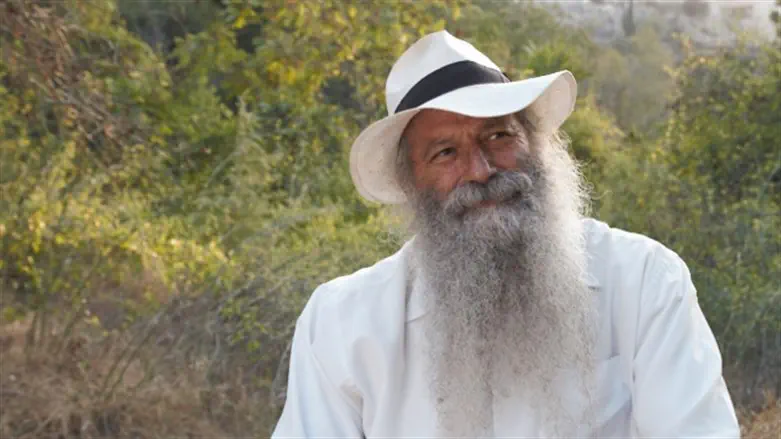
Everyone knew and loved Rabbi Aharon HaKohen. Like his namesake of old, he loved all Jews, religious or not religious, regardless of their opinions or political views. For almost 50 years he had headed the biggest yeshiva for baale tshuva in Israel, which had started with a small group of students in his tiny Jerusalem apartment. Since then tens of thousands of young people had found their way back to the Torah under his loving influence.
His assistant set a few papers on his desk. “This is the top-secret transcript of a short clandestine meeting of the Israeli cabinet which took place last week in a special bunker under the Knesset. No names are recorded, only number identification. It’s important that the Rav understand the deteriorating situation in all of its depth.
The aging Rabbi lifted the first page in his hand and started to read:
1. I think we can all breathe easier now that the government has withstood all attempts to bring it down. Until today our party has waited patiently to advance important foundations of our agenda, but now our patience has ended. For instance, we want a law against religious brainwashing to be introduced in the Knesset.
2. If you have forgotten, I wear a kippah. As Prime Minister, I can’t agree to a law like that during my term in office.
3. Let me remind everyone that your term in office is a short as your kippah is small. When my turn comes in another year to replace you, I won’t have any hesitation in supporting a law like that.
4. What exactly are you speaking about?
1. We want to close down yeshivot for baale tshuva and put an end to the ridiculous and coercive practice of making people put on tefillin on the street.
4. No one forces anyone to put on tefillin. There is no religious coercion involved. As the head of Religious Affairs, I can’t back such a proposal.
1. The black-hatters threaten people that they will go to Gehinom if they don’t put on tefillin . That’s indeed coercion. Whether it’s psychological or spiritual it should be against the law.
5. As everyone knows I am not religious but closing yeshivot for baale tshuva seems too drastic to me. We have to remember that after 2000 years of persecution amongst the nations, there is still a Jewish People today largely because of yeshivot and the dedication of the Haredim to Torah.
6. If you are worried about the Haredim, put your mind at rest. You see how everyone hates them. I’m proud to say that I have brought them to their knees with a few financial cutbacks which no one has seriously protested except their representatives in the Knesset. The public is tired of their parasitism and bullying tactics, and their belief that they are holier than everyone else.
2. Imaging the consequences of a law against religious coercion. The Jews of the Diaspora would never think about moving to Israel if we passed such anti-Jewish legislation.
3. Firstly, most of the Jews in Chutz L’Aretz don’t care about Judaism. As for the Orthodox, who needs them here in Israel? Most of them are rightest and if big numbers of religious olim were to come it would swing the balance of power to the right.
5. As the main minister in charge of civilian affairs in this country, it would be hypercritical of me to back a law forbidding religious coercion when missionaries are free to roam around the country luring Jews into Christian cults. If the laws of freedom of choice and freedom of action permit their activities then Jews should be free to follow Judaism as well.
2. The missionaries are free to do what they want because of Bibi who wanted the Evangelists to support the Likud and his platform in Washington. Pure politics.
1. For the most part missionaries are tourists and not under the jurisdiction of Israeli law. Besides, if a person wants to believe in Jesus, what do I care?
4. You care when a Jew wants to believe in Judaism. Don’t you find that hypocritical?
1. Not at all. Especially when brainwashing tactics are employed. For me, that’s a big no no.
4. Do we want to give our political opponents the opportunity to say we are anti-Semitic?
1. I am not anti-Semitic in any shape or form. I am anti-Judaism.
4. Judaism and being Jewish go together.
1. Now you sound like one of them.
2. I’m sorry, but I have another meeting scheduled. Does anyone else want to express an opinion?
7. For my part, a law banning religious coercion doesn’t bother me personally, but as the head of Israel’s military, I have to think about our religious soldiers. Such a measure could lead to rebellion in the ranks.
6. When the first wave of rebels end up in prison, the rebellion will come to a very quick end. Their Rabbis are big talkers and their followers are marshmallows. The days of the Maccabees are long over. The Exile has crushed the spirit of the religious. We may meet initial resistance of some crazy Haredim and the hilltop youth, but they constitute a mere handful. Let them all sit in jail and rot as far as I’m concerned.
2. Fortunately you are not Prime Minister. Closing down yeshivot has too many negative connotations. I am opposed.
4. I agree. Changes here and there in the system of kashrut supervision and conversion make sense to some of the public. Even doing away with the coercive restrictions surrounding marriage is likely to win a majority. But closing yeshivot for baale tshuva? That goes against common sense. People learn there on their own free will. You can’t stop that.
8. If I can speak for my party, brainwashing a person to believe that a Jew is someone who follows the Torah and that the only path to G-d is through the observance of primitive mitzvot which stand in total opposition to simple human logic, this is the worst type of coercion there is. In my opinion religious brainwashing is no different than insisting that a man is a man and a woman is a woman. Thank the Creator that those days are behind us. In the same way that we did away with homosexual counseling therapy, it is our duty as enlightened Jews and humanists to do away with religious coercion as well. If we truly aspire to become a light to the nations, banning religious coercion is the proper path to follow.
4. Next you will propose to outlaw brit milah. And religious parents won’t be allowed to send their children to religious schools.
1. That too is on our agenda. What gives parents the right to physically endanger their children without the consent of the child? And what gives them the right to send children to a brainwashing institute to make intellectual zombies out of them? Why should soldiers be forced to eat kosher food? If a hospital patient wants to eat chametz during Pesach, why can’t he? Why can’t everyone ride on buses on Shabbat?
2. I’m sorry but this discussion will have to be continued at some future date.
1. No problem, but let me inform my respected colleagues that my party is not interested in philosophical discussions. This proposal is a demand. We have an obligation to our voters. If a law against religious coercion isn’t passed then this government falls.
Setting the pages down on his desk, the Rosh Yeshiva glanced up at his assistant. “Is this all that there is?” he asked.
“That’s all that we have.”
“Did they meet again?”
“I don’t know.”
“Did the Cabinet vote on the issue?”
“Not that I know of. Something as sensitive as this could take time to formulate before an agreement is reached. It’s a game of give and take in politics. You do this for me and I’ll do that for you.”
“May Hashem guard over us,” the elder scholar said.
For several seconds neither man spoke.
“What about the Arab in the coalition? He’s religious isn’t he? Maybe he will save us.”
“His vote can be bought for the keys to the Galilee or for another land-for-peace agreement.”
The Rabbi nodded silently. “Whoever said that we have turned into marshmallows is correct,” he said sorrowfully.
“What can we do?” the assistant asked.
“We can pray,” the Rabbi answered. As King David teaches, ’A broken heart, the L-rd will not despise.’”
The assistant waited for some more concrete instruction. “That’s well and good, HaRav, but ‘tachlis,’ what needs to be done?”
The Rabbi smiled his small patient smile of unshakable belief. Once again he quoted from the Nation’s holy sources.
“’In our lowliness He remembered us. His kindness lasts forever… The Eternal One of Israel is not a man that He should lie.’ Tell everyone not to worry. Everything will be all right. After all, haven’t our Sages told us that during the footsteps of Mashiach ‘insolence will increase; the vine will yield its fruit abundantly, but wine will be expensive; the government will turn to heresy and there will be none to offer reproof; the meeting-place of scholars will be used for immorality; Galilee will be destroyed and the borders made desolate; and the dwellers on the frontier will go about begging from place to place without anyone to take pity on them. The wisdom of the learned will degenerate; those who fear sin will be despised; truth will be lacking; youths will put old men to shame; the old will stand up in the presence of the young; a son will revile his father; a daughter will rise against her mother; the face of the generation will be like the face of a dog; and multitudes of trouble and evil decrees will be promulgated anew, each new evil coming with haste before the other has ended.’”
The smile on the shining face of Rosh Yeshiva broadened into a happy and confident grin.
“According to this Talmudic scenario, everything is unfolding according to plan. Hashem is still very much with us. All of the machinations of our confused brothers and sisters will crumble. May their empty decrees bring hundreds of thousands of our brethren back to the Torah. One day soon even the leaders of the government will all flock to our yeshiva to learn. ‘Nahafoch Hu.’ In the meantime, we shall continue to trust in Hashem, as our Sages have assured at the end of the same Gemara, ‘Upon whom can we rely? Upon our Father in Heaven.’”
He lifted the pages of the secret transcript and dropped them into the wastebasket beside his desk. With a small groan of effort and firm resolve, the wizened scholar rose from his chair.
“Mincha,” he said. “Our students are waiting.”
Tzvi Fishman was awarded the Israel Ministry of Education Prize for Jewish Culture and Creativity. Before making Aliyah to Israel in 1984, he was a successful Hollywood screenwriter. He has co-authored 4 books with Rabbi David Samson, based on the teachings of Rabbis A. Y. Kook and T. Y. Kook. His other books include: "The Kuzari For Young Readers" and "Tuvia in the Promised Land". His books are available on Amazon. Recently, he directed the movie, "Stories of Rebbe Nachman."