

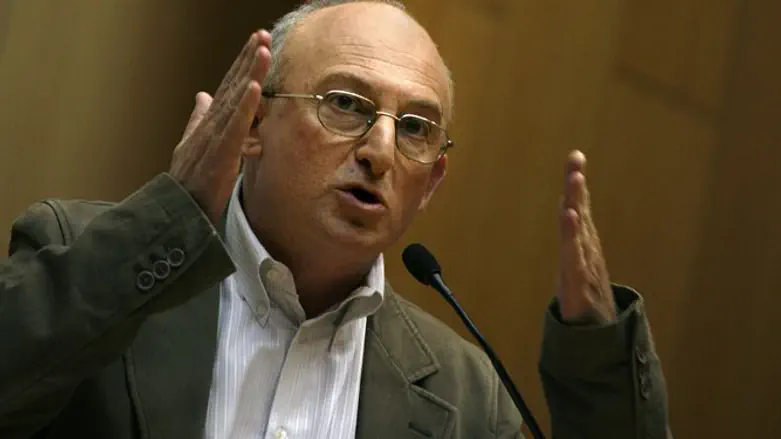
Arutz Sheva spoke with Professor Aryeh Eldad, former IDF chief medical officer, to discuss the government’s handling of the coronavirus crisis.
“The Israeli health system has excellent hospitals, experts, and scientists,” he stressed at the outset of the interview. “When dealing with a terror attack, we manage superbly, evacuating the wounded and providing swift treatment. However, when it comes to dealing with a mass disaster, we don’t manage well. If G-d forbid there was an earthquake with thousands of casualties, the army would be brought in. In such an event, we need special government bodies for gathering data, managing the event, and overseeing the management – also coordinating the effort with other sectors such as the economy, transportation, and agriculture.”
Eldad noted that the protocols for just such a scenario are already in existence. “We have already invested a huge amount of time and money in drawing up the plans for a mass disaster,” he said. “But these plans aren’t being implemented now. Why? Because, unlike a war, or an earthquake, an epidemic doesn’t become a catastrophic event at one clear point in time. Instead, the situation evolves, and the government response evolves with it. That’s what’s happening now. And I have to admit that the government, and specifically the Health Ministry, is coping very well with the crisis. It is truly deserving of praise, and has done a huge amount to mitigate the extent of the epidemic here.”
All the same, Eldad singled out isolated points of failure in the government’s response that he believes indicates that the crisis is no longer manageable using the current methods. “Take a look at Bnei Brak, for instance, or the situation in the retirement homes,” he says. “It could be that these examples are just the tip of the iceberg, and that more issues will make themselves felt in the coming weeks.”
“The government has a special task force for dealing with crises such as the present one,” he noted. “But it hasn’t been put on the case yet.”
Why not? Is the reason the usual one: politics?
“No, that’s not the main reason,” he replied. “I think it’s simply because people are human. Once people are already in the thick of things, they don’t just step aside and say: Okay, let someone else take over now. And that’s only natural,” he said, “especially given the experience the people running things have gained along the way. But this is why we draw up protocols in advance,” he noted wryly. “In order to take into account the human factor.”